
Filter by
Sort
Sub-category
State
Language
Tags
Price
Duration
Audience
Author
Online HR Compliance Workplace Violence Courses
Courses

HR Compliance
Preventing Workplace Violence for Employees


HR Compliance
Active Shooter Awareness: Incident Response


HR Compliance
Workplace Violence Prevention in California Spanish

HR Compliance
Workplace Violence Prevention in California (Retail)
HR Compliance
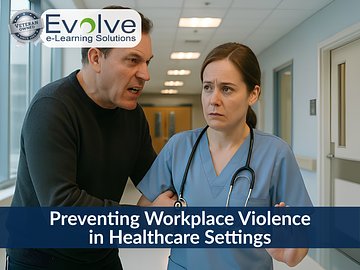
Preventing Workplace Violence in Healthcare Settings

HR Compliance
Workplace Violence Prevention Made Simple Spanish


HR Compliance
Active Shootings in Retail: Prevention and Survival





HR Compliance
De-Escalation for Office (Spanish) - Desescalamiento




HR Compliance
Conflict Resolution: Keeping the Peace at Work

HR Compliance
Workplace Conflict: Understanding Conflict Behaviour

HR Compliance
Workplace Conflict: Managing Workplace Conflict



About Workplace Violence Training
A school principal once told me about the day a teacher came running into her office, shaken after breaking up a heated argument between two parents in the hallway. “I could see the fear in her eyes,” she said. “She kept asking, ‘What if it had gotten worse? What if I couldn’t stop it?’”
That fear isn’t unusual. From hospitals and retail counters to offices and warehouses, most people never expect violence at work—until it happens. And when it does, the ripple effect can linger for weeks. Productivity drops. Trust cracks. People start asking about workplace violence prevention training, “Am I really safe here?”
That’s why workplace violence training matters. It’s not just another compliance box. It’s a way of giving employees confidence, protecting organizations, and sending a clear message: “Your safety matters here, and we have procedures in place for workplace violence prevention.”
Understanding the Core Issues in Workplace Violence Training
Workplace violence isn’t only about dramatic, headline-making incidents; it also includes the need for effective workplace violence prevention training. More often, it starts small: a customer’s anger bubbling over at a cashier, a heated disagreement between coworkers, or an employee’s personal struggles spilling into the office.
The real impact shows up quietly:
-
Employees walking into work with tension in their stomachs.
-
Teams distracted, productivity slipping.
-
Good staff leaving because they don’t feel protected.
For leaders, the worry is constant: “If something happened here, would my people know what to do?” Training helps replace that worry with clarity.
Legal & Industry Framework
Laws don’t leave much room for guesswork. OSHA expects workplaces to be free of recognized hazards, and violence is one of them. In some industries—healthcare, education, government—the rules are even more specific. California, for example, requires hospitals to have formal violence prevention programs.
But compliance isn’t just about avoiding fines. Imagine standing in front of your employees—or worse, the media—after an incident and having to admit: “We never prepared for this.” Training prevents that moment when a worker feels unprepared to handle workplace violence. It shows you didn’t just hope for safety—you invested in it.
Employer/Organization Responsibilities
The responsibility starts with leadership. Employees notice when executives make time for safety—or when they don’t.
Organizations are expected to:
-
Provide real training, not just a handbook buried in onboarding.
-
Set up reporting systems that employees actually trust.
-
Keep documentation not just for regulators, but to learn from close calls.
When leaders sit in the training course alongside staff, the message is powerful: they are committed to preventing workplace violence. “This isn’t just your responsibility. It’s ours too.” That builds loyalty and strengthens culture in ways paychecks alone can’t.
Employee/Individual Responsibilities
Employees play their own part. They’re the ones who see when a coworker seems on edge, when a customer’s tone is shifting, or when tension is brewing.
Training gives them tools to report workplace violence concerns without second-guessing themselves.
-
Stay calm when voices rise.
-
Step back when things feel unsafe.
-
Report workplace violence concerns without second-guessing themselves, thanks to the training course.
Think of it like a fire drill. Nobody loves practicing, but when the alarm goes off, muscle memory kicks in. Violence training works the same way—it gives people the confidence to act when adrenaline would otherwise take over.
Case Studies and Scenarios
-
Healthcare: A nurse once described facing down an enraged visitor. “My hands were shaking,” she admitted, “but I remembered my training. I slowed my voice, gave him space, and signaled security. Ten minutes later it was over—and no one got hurt.”
-
Office: A tech company skipped violence training, assuming risk was low. When a terminated employee returned, shouting threats, employees froze. The incident ended safely, but the company faced lawsuits and months of damaged morale. Leadership later admitted, “We should’ve prepared sooner.”
-
Retail: At a busy store, employees practiced active-shooter drills. When the worst happened, their calm guidance helped shoppers evacuate safely. Law enforcement later said those drills prevented loss of life.
Each story highlights the same truth: preparation changes everything.
Preventive Measures and Best Practices
Good prevention doesn’t overwhelm employees with policies—they’ve already got plenty of those, but a clear training course can help. What works best is practical, human, and repeatable training course:
-
Clear expectations written in plain, everyday language.
-
Scenario training where employees practice real responses.
-
Refresher sessions so knowledge doesn’t fade over time.
-
Anonymous reporting tools to make speaking up about workplace violence concerns less scary.
-
Visible leadership involvement so everyone knows safety isn’t optional.
Interactive formats—short online modules, role-playing, mobile reminders—stick far better than long lectures. People remember what they’ve practiced, not just what they’ve been told.
Compliance, Certification & ROI
For HR and compliance leaders, part of the job is proving preparedness. Certificates and training logs don’t just sit in a drawer—they’re audit-ready proof that you took your responsibility seriously.
The ROI is evident in numbers—fewer claims, lower turnover, and reduced legal exposure. But the real payoff is personal. It’s when an employee says, “I feel safer coming to work now.” It’s when leaders can go home at night knowing, “We did what we could to protect our people.”
Conclusion
Workplace violence training isn’t about imagining the worst. It’s about preparing for it, so that if the worst comes, people know what to do.
For employees, it builds confidence. For leaders, it builds peace of mind. For organizations, it protects both people and reputations.
Every manager, HR director, or safety officer eventually asks themselves: how can we improve our workplace violence prevention training? “If something happened tomorrow, would we be ready for an emergency?” Training makes sure the answer is yes.
Workplace Violence FAQs
Why is Workplace Violence Training important for businesses?
Workplace violence training is important because no one should have to come to work worrying about their safety. Training sets the standard by showing employees that leadership cares about more than deadlines—it cares about people. It helps prevent dangerous situations, protects the company if something does happen, and builds trust that keeps employees engaged and loyal.
How often should Workplace Violence Training be updated?
Workplace violence training should be updated at least once a year, but more frequent refreshers make it stick. People forget, especially under stress, so short reminders—like drills, role-plays, or a five-minute talk during a meeting—help reinforce lessons. These small updates keep safety from becoming just a “one-and-done” class.
Are online Workplace Violence Training programs as effective as in-person training?
Online workplace violence training can be just as effective as in-person when it’s done well. A static slideshow won’t work, but interactive content—real scenarios, short videos, and decision-making quizzes—helps lessons stay with employees. The flexibility of online training makes it easier to complete, and when paired with in-person drills or discussions, it creates a stronger overall program.
What happens if Workplace Violence Training is ignored or not applied?
If workplace violence training is ignored, the risks are serious. One incident can escalate quickly, leading to injuries, lawsuits, and a major hit to morale. The deeper cost is broken trust—when employees see that leadership didn’t prepare, they feel safety wasn’t a priority. That damage to culture and confidence can last far longer than the incident itself.
How can organizations measure the effectiveness of Workplace Violence Training?
The effectiveness of workplace violence training is measured by behavior and confidence, not just completion. Do employees report concerns earlier? Do they respond calmly in tense situations? Surveys and mini refreshers can help test what’s stuck. When the team feels prepared instead of panicked, that’s the clearest sign the training is working.